Our Story
Since 1980, the Arid Lands Environment Centre (ALEC) has been one of Central Australia’s leading voices for environmental protection, ecological justice, and community led advocacy. Founded in Mparntwe/Alice Springs, ALEC has built a long history of independent, community-led campaigning that has helped shape environmental outcomes across the arid zone.
Over four and a half decades, ALEC has played a central role in major environmental and social justice victories, including:
-
Standing with the community to successfully resist the proposed Muckaty Station nuclear waste dump
-
Campaigning for the establishment of Tjoritja / West MacDonnell National Park
-
We were a founding partner of Alice Springs Solar City
-
We were a founding partner of the internationally significant 10 Deserts Project, the world’s largest First Nations-led conservation initiative
-
Played a key role in securing the Northern Territory Government’s declaration of buffel grass as a weed in 2024
Why the Arid Lands Matter
Australia’s arid lands are ecologically rich, culturally significant, and globally important landscapes. This vast region contains some of the largest remaining relatively intact desert ecosystems on Earth, supporting unique biodiversity, precious groundwater systems, and continuing First Nations custodianship and cultural knowledge.
Threats to the Arid Lands
Despite these values, the arid lands are often treated as politically marginal and viewed through an extraction mindset. Governments and corporations continue to prioritise groundwater extraction, industrial agriculture, gas expansion and mining over ecological health, community wellbeing, and long-term sustainability. Environmental protections remain weak across climate policy, invasive species management, and groundwater governance, while industrial projects continue despite concerns raised by Traditional Custodians, scientists, and communities.
At the same time, the climate crisis is intensifying pressures across the region. Extreme heat, flooding, fire weather, and prolonged drought are becoming more severe and frequent, while long-term, community-led adaptation responses remain limited.
Together, these pressures are increasing community vulnerability and accelerating ecosystem decline through invasive species spread, biodiversity loss, habitat degradation, altered fire regimes, and threats to the groundwater systems that sustain life across the desert.
Our Role
ALEC works with arid lands communities to address urgent, systemic environmental threats. We are grounded in place and committed to environmental justice: centring the experiences, needs, and aspirations of arid lands communities is core to who we are.
Our Work
Our campaigns respond to recognised threats facing the arid lands, alongside calls for action from communities across the region. We are currently campaigning in the following areas:
Climate: Climate adaptation and preparedness in a region already experiencing the impacts of climate change, particularly extreme heat, and supporting communities to respond and adapt.
Anti-fracking: A decade-long campaign to stop gas development in the Beetaloo Basin and protect Country, water and communities from fracking.
Water: A water justice campaign to protect sacred springs and finite groundwater resources, co-developed with First Nations community and organisations.
Nature: Protecting nature and biodiversity, with a primary focus on tackling buffel grass through advocacy and community mobilisation, alongside supporting local restoration groups.
Arid-zone sustainability Supporting two community gardens and building environmental education and engagement through arid-zone living, arts, learning and connection with the landscape.
Our Community
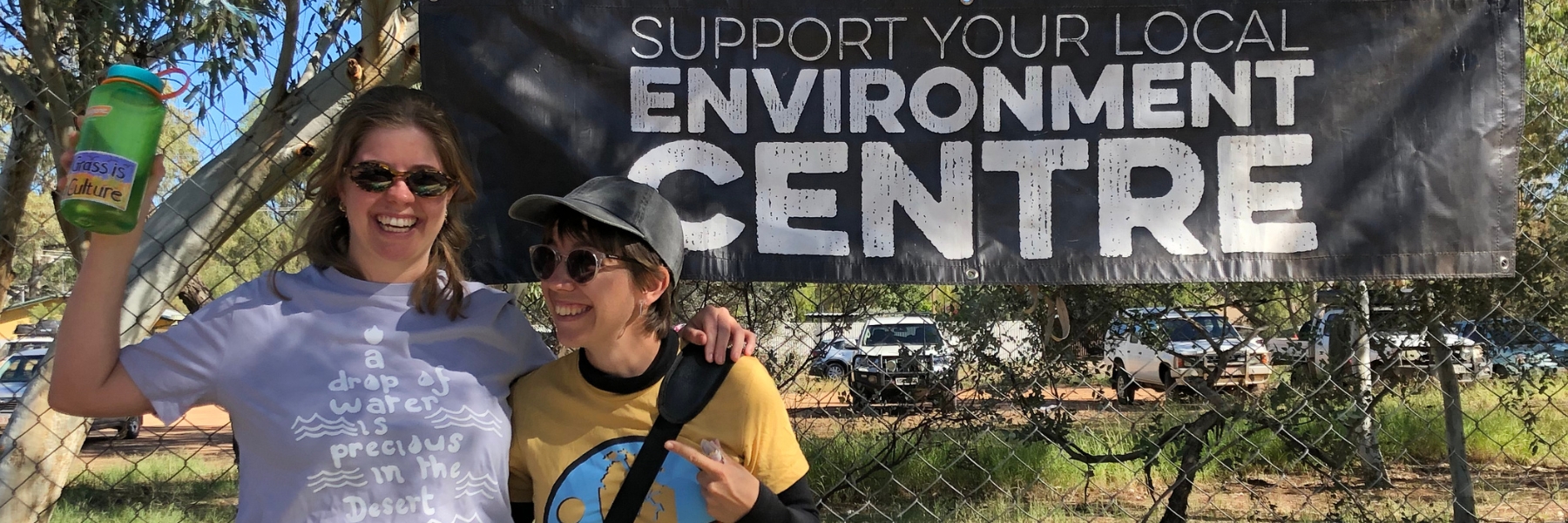
ALEC has strong engagement from local people, businesses and community groups. This strong community support for ALEC is what has enabled us to survive and thrive in Alice Springs.