On 12 August 2026, the Inaugural Central Australia Heat Resilience Summit brought together community leaders, technical experts and researchers, representatives from government and the community sector to share knowledge about the impacts of extreme heat on human health and liveability across Central Australia. This is the first time that people have gathered at this scale to discuss the impacts of extreme heat and to workshop towards collaborative and coordinated approaches to meet the rising challenge of extreme heat in the region.
This statement was read at the end of the Summit with a majority of support from attendees.
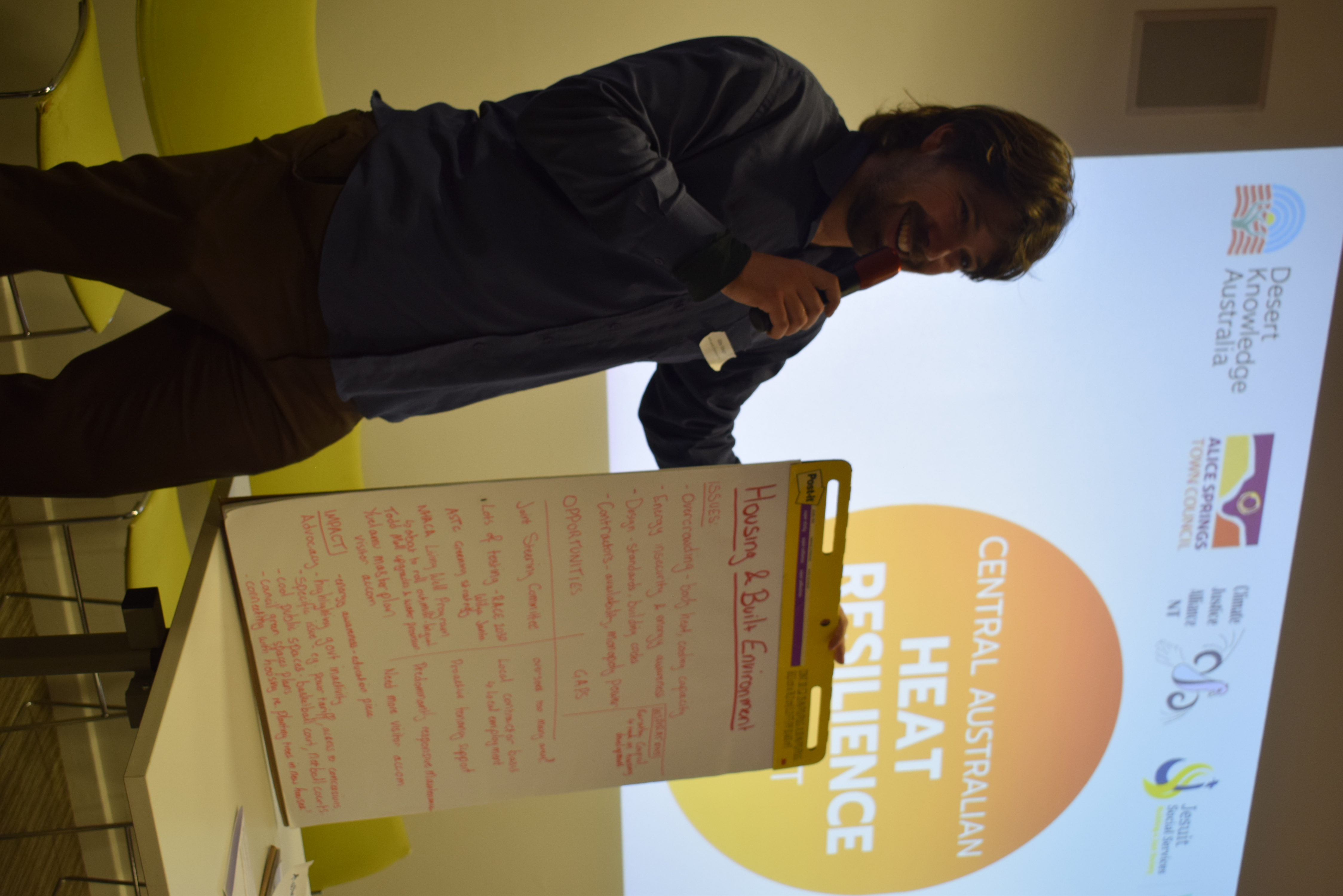
On 12 August 2026, the Inaugural Central Australia Heat Resilience Summit brought together community leaders, technical experts and researchers, representatives from government and the community sector to share knowledge about the impacts of extreme heat on human health and liveability across Central Australia. This is the first time that people have gathered at this scale to discuss the impacts of extreme heat and to workshop towards collaborative and coordinated approaches to meet the rising challenge of extreme heat in the region.
This statement was read at the end of the Summit with a majority of support from attendees.
We acknowledge that extreme heat is a significant economic, social and environmental challenge for Central Australia, with impacts on health, livelihoods and wellbeing across the region.
Hazards and risks arising from extreme heat are compounding across the region. We are already feeling it. Across the summer and autumn of 2024/2025, Alice Springs experienced its hottest 100 days on record, with the average maximum temperature of 40 degrees for nearly 3.5 months.
Extreme heat places pressure on human health, household energy security, workforce attraction and retention, business viability and community wellbeing. These impacts compound existing challenges facing the region and are felt most acutely by those with the least capacity to adapt.
Climate projections make clear that extreme heat events in Central Australia will increase in frequency and intensity, and that improving preparedness through practical, coordinated action will deliver social and economic benefits while reducing the costs and risks associated with inadequate preparation.
We recognise that Central Australia is well placed to respond. Aboriginal people have lived successfully in arid environments for tens of thousands of years, and the region holds deep knowledge, lived experience and demonstrated capability in this area. Building on these strengths presents an opportunity for Central Australia to be a national leader in heat preparedness and resilience.
We agree to work together to mitigate the impacts of extreme heat on human health and wellbeing, energy security, workforce retention, business viability and social cohesion, and to strengthen community connection, adaptive capacity and resilience across the region.
We affirm that improving preparedness for and responses to extreme heat is a shared priority for communities across Central Australia, requiring sustained collaboration across all levels of government, the non-government sector and the wider community.